Last weekend, Emerald Fennell’s “Wuthering Heights” hit cinemas with a Valentine’s Day premiere — and the conversation online hasn’t let up. Critics are split: some applaud the daring reimagining of the Brontë classic, while others think it strays too far from the source material.
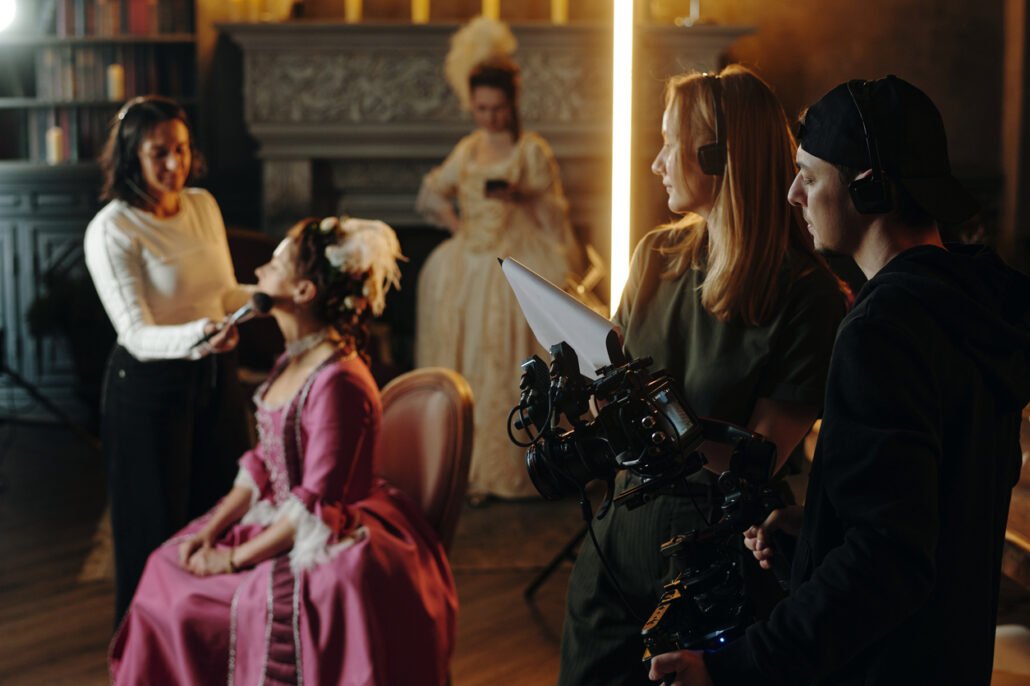
But the real buzz isn’t about plot or performances — it’s the costumes. Designers ditched strict historical accuracy in favour of bold, imaginative choices, blending eras, textures and unexpected materials to create looks that feel modern and emotionally alive. And these creative risks don’t just make headlines — they offer lessons for storytelling and marketing alike.
Creative Licence on Screen
Period dramas used to live and die by accuracy. Every hem, fabric and accessory was meant to replicate the past perfectly. But designers like Jacqueline Durran — whose “Wuthering Heights” costumes fuse Victorian silhouettes with 1950s glamour and even futuristic materials — show how breaking the rules can elevate a story. The goal isn’t to recreate history, Durran says, but to capture mood, emotion and character in a way that resonates today.
This approach isn’t unique to Fennell’s adaptation. Productions like Poor Things and Bridgerton have embraced similar anachronistic choices — latex, plastic and high-fashion flourishes — creating spectacles that are theatrical, visually striking and emotionally engaging. These examples show the power of prioritising impact over literal accuracy, a principle that applies across creative industries.
Mood, Emotion and Audience Connection
Why does this approach work? Partly, it’s cultural. Stylised, imaginative costumes thrive when audiences crave escape. When Bridgerton premiered in 2020, amid a global pandemic, people were drawn to the escapism of the lush visuals, even if they weren’t strictly accurate.
Costumes now act as shorthand for mood and character. They ask: “How does this story feel?” rather than “What would people have actually worn?” This mirrors how successful marketing works today: it’s about creating an emotional connection, evoking a feeling and leaving a lasting impression.
The Debate: Accuracy vs. Impact
Not everyone agrees with this approach. Many historians and designers argue that skipping strict detail risks losing richness and authenticity. Accurate historical design educates, transports and deepens understanding.
Yet as one designer put it, “This isn’t a documentary.” Costumes exist to tell a story. When bold choices spark conversation, evoke feeling or stick in the memory, they succeed.
What Bold Costume Design Teaches Creatives
The rise of imaginative, risk-taking costume design demonstrates that thoughtful creative risks often pay off. Designers who mix eras, textures and unexpected details create moments that stick, spark conversation and resonate emotionally.
For marketers and storytellers, the lesson is clear: a little creative risk — whether through striking visuals, unconventional messaging or playful reinterpretation of familiar ideas — can capture attention and engagement in ways that purely “safe” choices cannot. Convention has its place, but standing out often comes from thoughtful risk-taking.
Stylised, anachronistic costume design reminds us that imagination, emotion and daring choices are more memorable than simply following expectations — whether on screen or in a campaign.
Want to read more about movies and marketing? Check out our blog on Bridget Jones and the Power of Nostalgia Marketing.
Looking for a consumer PR and marketing agency? Visit our Contact page — we’d love to chat!
Sources
Blog Cover Image: istockphoto.com/Pressmaster